How to Get Motivated: 6 Strategies That Work
Practical ways to get motivated when willpower isn't enough, especially for ADHD brains that run on interest, not importance.

.svg)

"Just do it" only works if your brain reliably converts importance into action. For a lot of people, especially with ADHD, it doesn't. Motivation isn't a character trait you either have or don't. It's something you can engineer.
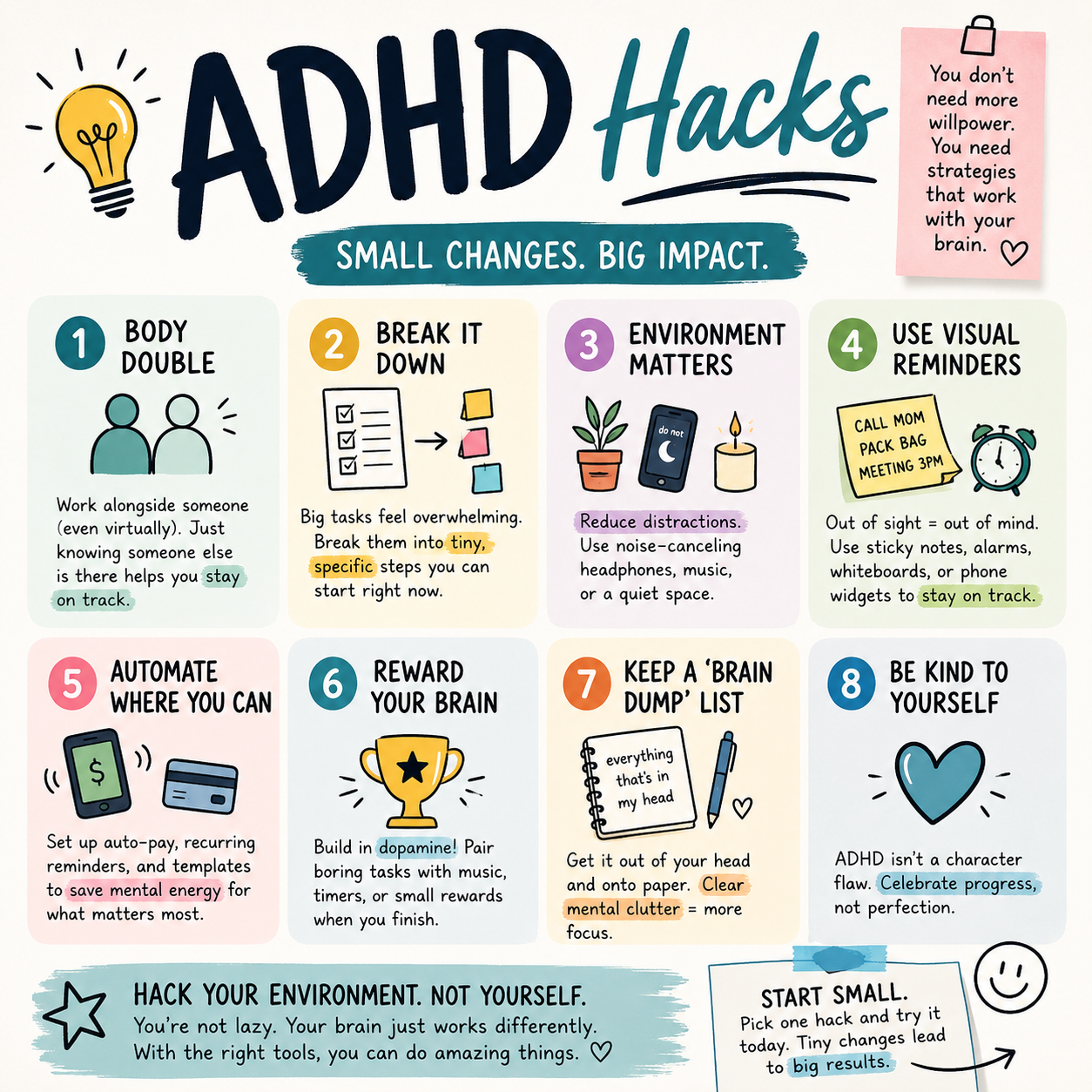
1. Make the task more interesting, not just more important. Reminding yourself a task matters rarely creates the push to start it. Instead, ask what would make it more novel, urgent, or engaging: a timer, a different location, music, or turning it into a small competition against yourself.
2. Shrink the task until starting feels trivial. "Write the report" is too big to start. "Open the document and write one sentence" isn't. Motivation often shows up after you start, not before, so make the entry point small enough that starting doesn't require much motivation at all.
3. Borrow someone else's presence. Working alongside another person, even quietly, even over video call, makes starting easier for a lot of people. This is sometimes called body doubling. It's not cheating or a sign you can't do it alone. It's using accountability as a real tool.
4. Attach a reward to the start, not just the finish. Waiting until a whole project is done for any payoff is a long time to sustain motivation. Build in something small right after you start: a coffee, five minutes of something you enjoy, a checkmark on a visible list.
5. Use real deadlines, even artificial ones. Urgency is one of the more reliable motivators for a brain that struggles to act on importance alone. Set an earlier fake deadline, tell someone else your real one, or schedule the next step on your calendar like an appointment you can't skip.
6. Drop the shame-based pep talk. Telling yourself you're lazy or undisciplined might produce a burst of guilt-driven effort, but it doesn't build motivation you can return to tomorrow. It usually makes starting harder next time. Talk to yourself the way you'd talk to someone you were actually trying to help.
Motivation isn't something you wait to feel before you act. Most of the time, it shows up after you've already started, which means the real question isn't "how do I want this more," it's "what's the smallest, most interesting way to begin."


.svg)
.svg)