How to Deal With ADHD: 7 Practical Strategies
Practical, everyday strategies for managing ADHD, from externalizing memory to handling shame, without oversimplifying the struggle.

.svg)

None of these replace a proper evaluation or treatment plan. But if you're living with ADHD right now, here are practical moves that actually help, day to day.
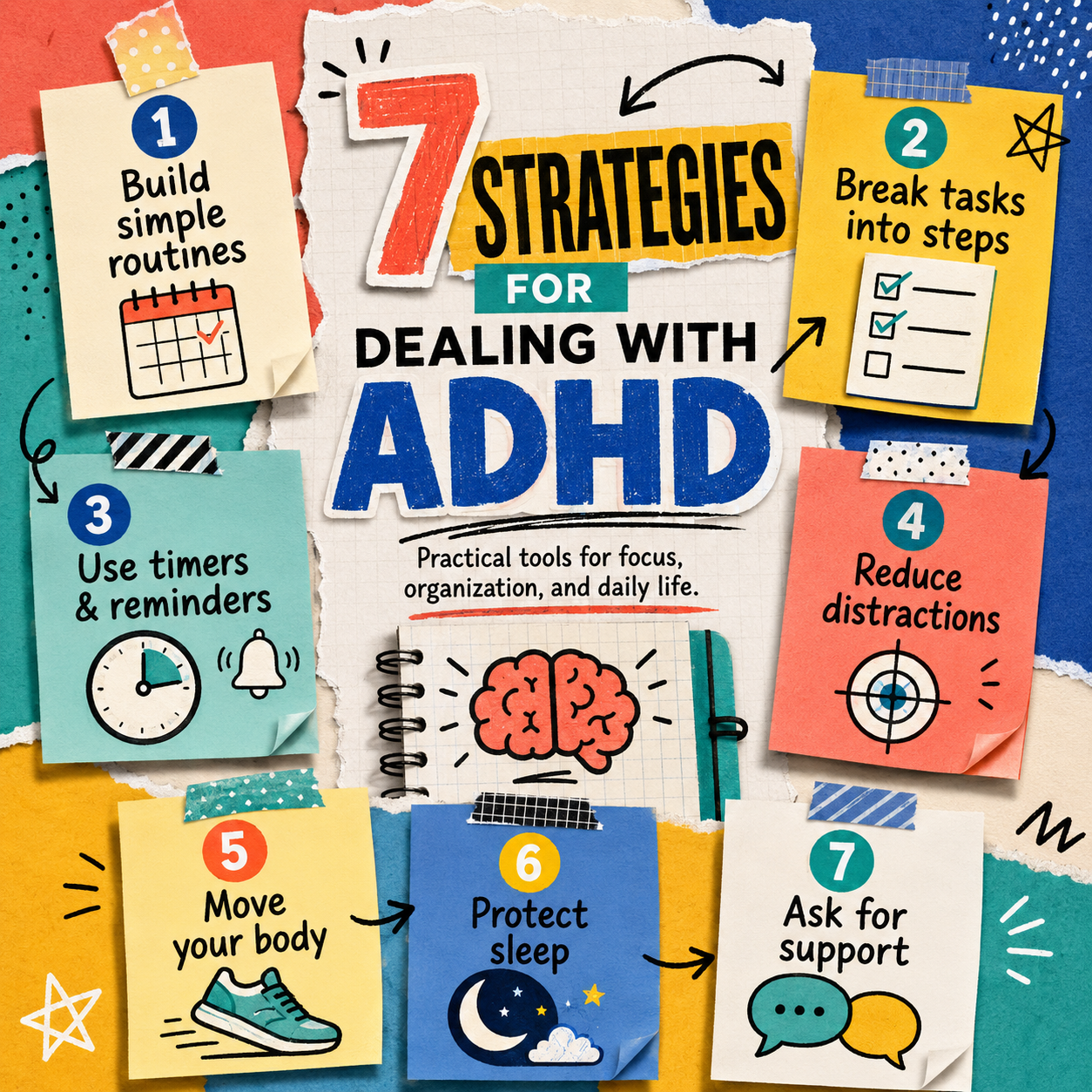
1. Externalize your memory. Don't trust your brain to hold a task, an appointment, or an idea until later. Write it down immediately, use a single trusted app or notebook, and get it out of your head. A written system doesn't rely on the exact thing your brain struggles with.
2. Break tasks down before you start, not while you're stuck. Big, undefined tasks are where ADHD brains stall out. Break the task into the first three physical steps before you sit down to do it, so you're never staring at a blank "where do I even start."
3. Use timers and externalized time. Time blindness is real. Set a timer for the length of a task, even a short one, so time has an external marker instead of relying on your internal sense of how long something's taking.
4. Move your body regularly. Exercise doesn't cure ADHD, but it's one of the more reliably effective tools for improving focus and mood regulation. It doesn't need to be intense. Consistent matters more than intense.
5. Protect your sleep like it's part of treatment, because it is. A sleep-deprived brain has less capacity for attention and regulation than a well-rested one, ADHD or not. If sleep is a mess, that's often the first place to intervene.
6. Use body doubling for tasks you keep avoiding. Working alongside another person, even quietly and on unrelated tasks, makes it easier to start and stay with something. This isn't a weakness. It's a legitimate accountability tool.
7. Watch how you talk to yourself about it. Years of missed deadlines and "why can't you just" comments build up a harsh internal narrative. Catching that voice and separating "I struggle with this" from "I am fundamentally failing" changes how sustainable the whole effort feels.
Managing ADHD well isn't about willpower. It's about building external systems that do the job your brain has a harder time doing internally, protecting the basics like sleep and movement, and refusing to let shame do the work that structure should be doing instead.


.svg)
.svg)